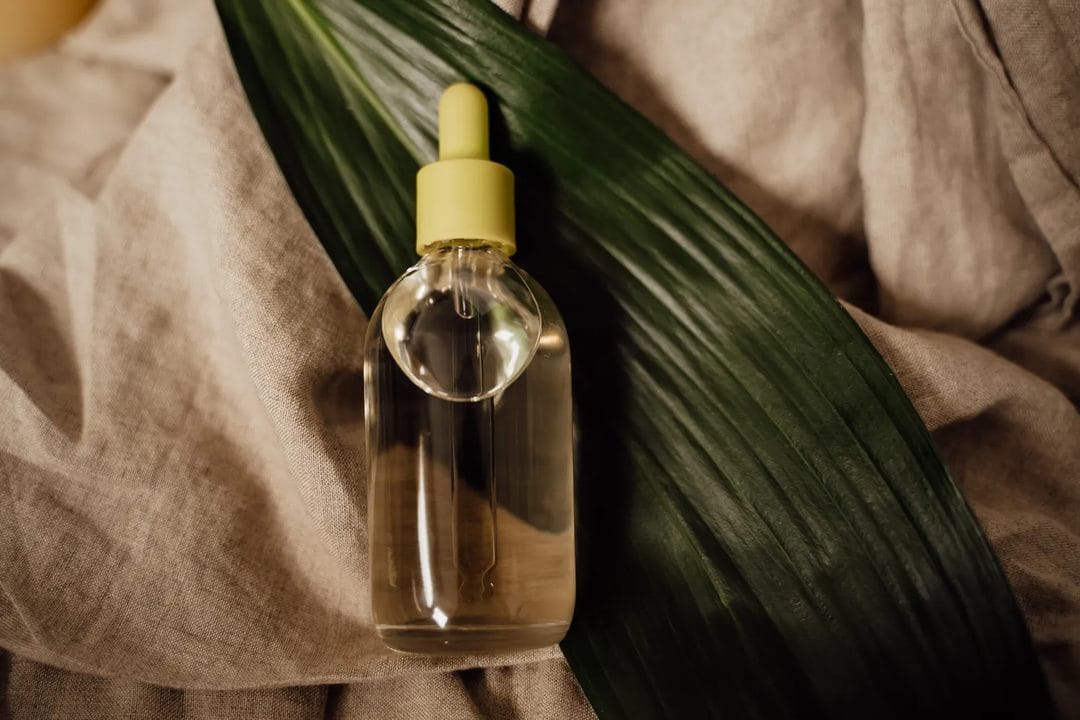
Centella asiatica shows up in roughly one out of every three "barrier repair" launches on Korean skincare shelves right now, and the ingredient deck reads almost identically each time: madecassoside, asiaticoside, madecassic acid, asiatic acid. The plant itself is a low-growing herb also called gotu kola or tiger grass — the folk name comes from the (unverified) story that wounded tigers rolled in it to heal faster. What's actually verifiable is narrower and, honestly, more useful than the marketing: this is one of the few "trendy" ingredients with a real pharmacological mechanism behind it, not just a good story.
What Centella Actually Contains
Centella asiatica extract is a mix of triterpenoid compounds — mainly asiaticoside and madecassoside, plus their acid forms asiatic acid and madecassic acid. These aren't inert plant filler. Asiaticoside has been studied since the 1960s as an oral and topical treatment for wound healing, originally in the context of leprosy ulcers and later for post-surgical scars, and it's a legitimate pharmaceutical ingredient in several countries, not just a K-beauty invention. The compound stimulates fibroblasts — the cells that produce collagen and extracellular matrix — and has documented anti-inflammatory activity by suppressing certain cytokine pathways involved in skin irritation.
That's a meaningfully different starting point than most "hero ingredients." Niacinamide had to earn its reputation through cosmetic-industry research. Centella asiatica arrived in skincare already carrying decades of wound-care and dermatology literature, which is part of why formulators reach for it when a product needs to say something about barrier repair without making an anti-aging claim that requires more evidence than they have.
Madecassoside vs. Asiaticoside: Not Interchangeable
Ingredient lists rarely distinguish between the four main triterpenoids, but they aren't functionally identical. Madecassoside is the gentler, more anti-inflammatory-leaning compound and tends to be the one used in redness-focused "cica" creams marketed at sensitive or post-procedure skin. Asiaticoside is the one with the strongest wound-healing and collagen-stimulation data, which is why it appears more often in scar-treatment formulations than in daily moisturizers. A product listing "Centella Asiatica Extract" without a percentage or a named triterpenoid is telling you almost nothing about which effect you're actually getting — this is one case where checking the full INCI list, not just the marketing copy, matters.
Why It Became a K-Beauty Phenomenon
The centella boom traces to a specific product cycle: Korean brands built entire "cica" lines around post-laser and post-peeling recovery, since in-office procedures are far more routine there than in the U.S. or U.K., and patients needed something to calm skin between sessions. That created a genuine clinical use case — not an influencer trend that got backfilled with science after the fact, which is how a lot of ingredient hype actually works. The marketing followed the function, rather than the other way around.
Once it crossed into mainstream skincare, the claims inflated well past the evidence. You'll see centella sold as an anti-aging ingredient, a pore-minimizer, an acne treatment, and a "detox" ingredient — none of which has meaningful research behind it. The honest claim is narrower: calming acute irritation, supporting barrier recovery after a compromised skin event (sunburn, over-exfoliation, retinoid purging, in-office procedures), and modestly assisting wound healing. That's a real, useful job. It's just a smaller job than the packaging implies.
How It Compares to Ceramides and Panthenol
People often lump centella in with ceramides and panthenol as interchangeable "barrier ingredients," but they work through different mechanisms and that distinction changes which one you should reach for.
- Ceramides are structural — they're literally the lipid building blocks of the skin barrier, so they replace what's missing when the barrier is physically depleted (over-exfoliation, harsh cleansers, long-term retinoid use, eczema-prone skin).
- Panthenol (provitamin B5) is a humectant and mild anti-inflammatory that pulls in water and softens the sensation of irritation, but it doesn't rebuild barrier structure the way ceramides do.
- Centella asiatica sits between the two: it has genuine anti-inflammatory and wound-healing signaling, but it isn't a structural lipid replacement, so it won't do what ceramides do for a barrier that's mechanically stripped.
In practice, the best-formulated "cica" products don't rely on centella alone — they pair it with ceramides or fatty acids to cover both the signaling and the structural side. If a product's only barrier-repair ingredient is centella extract, it's addressing inflammation, not rebuilding what's actually missing from a damaged moisture barrier.
What It Can — and Can't — Realistically Do
Where centella asiatica earns its reputation:
- Calming visible redness and stinging after over-exfoliation, sunburn, or aggressive acid use
- Supporting recovery after in-office procedures like microneedling, laser resurfacing, or chemical peels
- Reducing the sensation of tightness and irritation during retinoid or retinal introduction
- Modest support for the appearance of scars and post-inflammatory marks, based on its wound-healing data
Where the marketing outruns the evidence:
- Anti-aging claims (fine lines, firmness) — there's no strong independent data for this beyond the general antioxidant activity most plant extracts have
- Acne treatment on its own — it may reduce inflammation around existing breakouts, but it doesn't address the causes of acne (excess sebum, clogged follicles, bacterial overgrowth) the way salicylic acid or benzoyl peroxide does
- "Detoxifying" claims — this is marketing language with no defined mechanism, on centella or any topical ingredient
None of that makes centella a bad ingredient. It makes it a specific-purpose one, which is a more useful thing to know before you pay $38 for a serum expecting it to do a moisturizer's job and an anti-aging serum's job at once.
The Early-Autumn Barrier Transition
September is when this ingredient actually earns its keep for a lot of people, and not for a seasonal-marketing reason. Summer routines tend to get stripped down — lighter gel moisturizers, more sunscreen reapplication, more sweat, more exfoliating acids to deal with congestion and body breakouts. That combination quietly thins the barrier over a few months without necessarily causing an obvious flare-up. Then the humidity drops, indoor heating starts cycling on and off, and skin that tolerated a 10% glycolic toner fine in July suddenly stings in October.
This is a genuinely different problem from a real barrier injury, and it's worth being honest with yourself about which one you're dealing with. If your skin only tightens after a hot shower or on a windy day, a centella-containing moisturizer layered under a slightly heavier occlusive at night is a reasonable, low-effort fix. If you're seeing persistent redness, flaking, or a burning sensation from products that never bothered you before, that's a barrier that needs ceramides and a break from actives — not a calming serum used as a workaround while you keep exfoliating at the summer rate.
The practical move for this transition isn't buying a new centella product — it's cutting back your acid frequency by roughly a third as the air dries out and layering in one ceramide-containing moisturizer at night, reserving centella-forward products for the days your skin actually looks stressed rather than using them as a permanent daily step.
Who Should Actually Use It
Centella asiatica is genuinely worth having in a routine if you have reactive or sensitized skin, you're mid-retinoid-introduction, you get regular in-office treatments, or you're prone to post-inflammatory redness after breakouts. It's a reasonable everyday ingredient for most skin types since irritation is close to universally unwelcome and the compound has a low sensitization profile in the concentrations typically used.
It's a poor primary choice if what you're actually trying to fix is active acne, fine lines, or a barrier that's been mechanically damaged rather than just irritated — those problems have better-evidenced, more targeted solutions, and centella works best as a supporting ingredient layered alongside them rather than as the main event.
Look for it listed with a percentage or as one of the first five ingredients if you want it to be doing real work rather than sitting in a formula at a fraction of a percent for label appeal — a common move once an ingredient trends, and centella is trending hard enough that plenty of brands now use it that way.