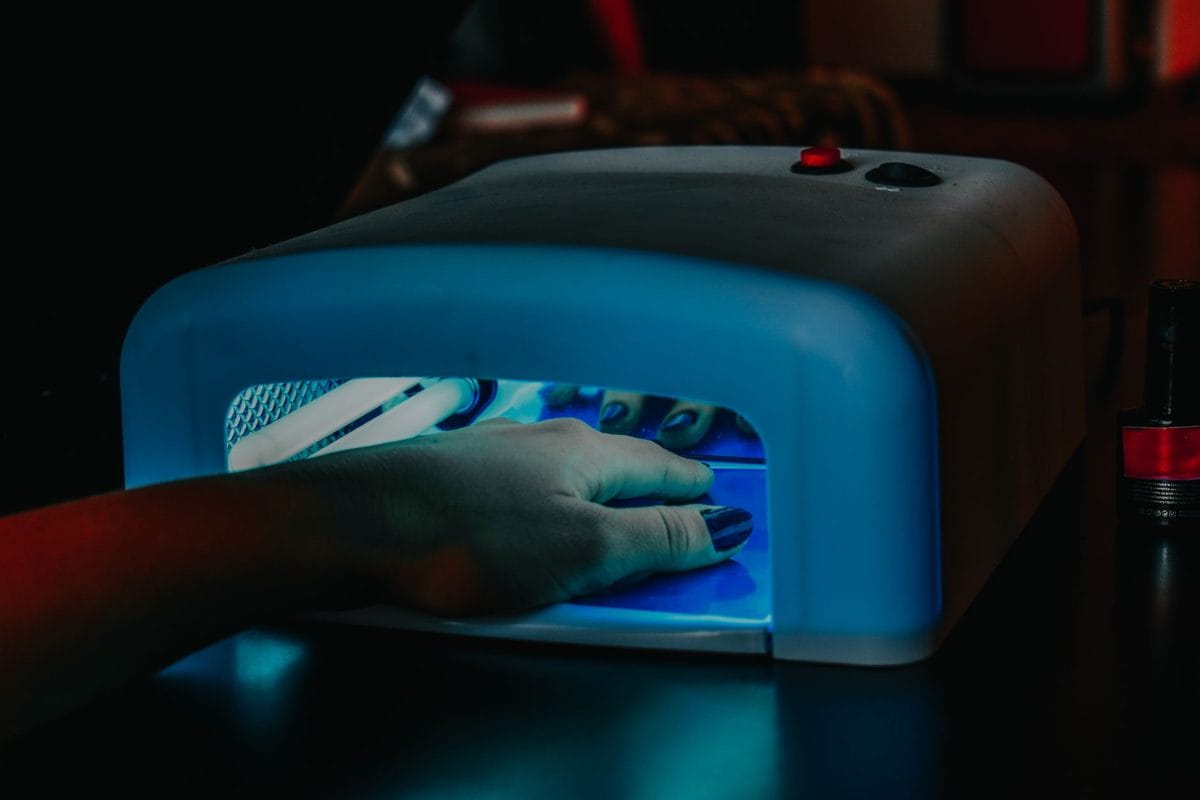
Every gel manicure ends the same way: base coat cured, color cured, top coat cured, three separate trips under a small plastic box that looks about as threatening as a nightlight. It isn't. That box is a UVA-emitting lamp, and in January 2023, researchers at the University of California San Diego and the University of Pittsburgh Medical Center published the first direct laboratory evidence that it damages living skin cells — not tanning-bed levels of damage, but measurable damage all the same, and enough of it that several dermatologists started rethinking what they tell clients before a routine manicure.
The study didn't come out of nowhere. Gel polish has needed UV or LED curing since it went mainstream in nail salons around 2010, and complaints about dry, prematurely aged skin on the backs of manicure regulars' hands have circulated in beauty forums for almost as long. What changed in 2023 is that someone finally tested what the light does to cells directly, instead of relying on anecdotal reports of sunspots and crepey skin.
What's Actually Inside That Little Box
Nail lamps fall into two categories, and the terminology is where most of the confusion starts. Older salon devices use fluorescent UV bulbs, curing each coat of gel polish in roughly two minutes while emitting broad-spectrum UVA across the whole hand. Newer LED lamps, now standard in most US and UK salons, cure the same gel in 30 to 60 seconds by emitting a narrower, more concentrated UVA band tuned to the photoinitiators in modern gel formulas. Both types sit squarely in the UVA range — the same wavelength responsible for tanning-bed damage and for roughly 95 percent of the ultraviolet radiation that reaches your skin from ordinary sunlight. Neither is UVB, the shorter wavelength most associated with sunburn, which is why a session under a nail lamp doesn't turn your hands pink the way a bad afternoon at the beach would. That doesn't mean it's harmless — UVA penetrates deeper into skin than UVB and does its damage more quietly, through collagen breakdown and DNA changes that show up first as premature aging and, over enough years, as mutations. It's the same reason dermatologists have spent two decades warning about "safe" tanning-bed UVA exposure, and it's the exact category of light a nail lamp puts your fingertips under several times a month.
The dose is nowhere near a tanning bed's, and that's worth saying plainly before this goes further. A tanning bed session runs 10 to 20 minutes at intensities designed to visibly darken skin across the whole body, while a nail lamp exposes ten fingertips to a fraction of that intensity for 30 to 120 seconds per coat, three or four times per appointment. That's the comparison most coverage of the 2023 study got wrong: headlines implied gel manicures were "as dangerous as tanning beds," which the researchers never claimed and the dose math doesn't support.
What the 2023 Study Actually Found
The numbers were still higher than anyone expected.
Researchers exposed cultured human skin cells (keratinocytes) and mouse cell lines to a standard UV nail dryer for a single 20-minute session — roughly the length of curing four coats plus a touch-up. Between 20 and 30 percent of the exposed cells died. Three consecutive 20-minute sessions on successive days killed 65 to 70 percent of the remaining cells, and the survivors showed mitochondrial damage and mutation patterns resembling those found in UV-associated skin cancers. That's a real, published finding, not a projection or an industry estimate, and it's why the paper got picked up by outlets from NPR to Newsweek within days of release.
What it doesn't show is a confirmed link to skin cancer in actual nail-lamp users. The study used cultured cells in petri dishes, not living human hands tracked over years, and the authors were explicit that proving a real-world cancer risk requires long-term epidemiological data that doesn't exist yet — nobody has followed a large group of regular gel-manicure clients for a decade and compared their skin cancer rates against a control group. The World Health Organization's cancer research arm classifies UV-emitting tanning beds as a Group 1 carcinogen, the same category as tobacco; nail lamps carry no such classification, and probably won't until someone runs that longer study.
How the Exposure Actually Adds Up
Context matters more than the headline number. If you get gel manicures every three weeks — a fairly typical cadence at $35 to $65 per visit in most US salons — you're looking at roughly seventeen sessions a year, each delivering a few concentrated minutes of UVA to a small patch of skin on the backs of your hands and fingers. Compare that to fifteen minutes of unprotected midday sun on your hands while driving, gardening, or walking the dog without sunscreen, which most people rack up without thinking about it dozens of times a year. The nail lamp exposure is more concentrated per minute and hits a smaller, more precise area; the ambient exposure is far more frequent, covers more skin, and almost nobody applies sunscreen to the backs of their hands as part of a normal morning routine. Both add up over years, just on different timelines and through different mechanisms. Dermatologists' actual advice reflects that split: treat the backs of your hands as sun-exposed skin year-round, not just during a twenty-minute manicure appointment, because the ambient exposure is doing more cumulative damage than most people assume. The manicure lamp is simply the exposure people notice, because it's concentrated into a visible ritual instead of spread across a thousand unremarkable afternoons.
The bigger risk factor isn't any single session — it's the people who get gel manicures every two weeks for a decade or more without ever protecting their hands, which describes a meaningful share of regular clients. Nail technicians who spend eight hours a day next to a lamp curing other people's polish are a different, understudied risk category entirely, and one the 2023 paper flagged as worth its own occupational-exposure study.
Protecting Your Hands Without Giving Up Gel
You don't need to swear off gel polish to cut your exposure meaningfully. A few habits do most of the work, and none of them add real time to your appointment.
- Apply a broad-spectrum mineral sunscreen with SPF 30 or higher to the backs of your hands 15 to 20 minutes before your appointment — EltaMD UV Clear SPF 46 (around $41) and Supergoop! Unseen Sunscreen SPF 40 (around $38) are both formulated to sit under gel polish without smudging or interfering with adhesion.
- Wear fingerless UV-blocking gloves during the curing steps, sold specifically for nail lamp use for $12 to $20 online, and most salons will let you bring your own pair.
- Ask your technician to stick to the gel manufacturer's minimum cure time rather than the "extra cure for safety" habit some salons default to, which can add 30 unnecessary seconds of exposure per coat.
- Space out full sets. Every four weeks instead of every two roughly halves your annual UVA dose from manicures alone, and your nail beds get a real recovery window in the process.
Skip the sunscreen-free manicure. It's a thirty-second habit that costs less than the polish itself, and it's the single change with the best evidence behind it.
LED Lamps Aren't the Safer Choice They're Marketed As
Salons that upgraded to LED lamps often present the switch as a safety improvement, and in one narrow sense it is: less time under the light per coat. But LED and older UV bulbs emit UVA in the same general wavelength range — LED lamps are just more efficient at delivering it, which is exactly why they cure faster. The 2023 study specifically tested an LED-based nail dryer, not an old-style fluorescent tube, so the cell-damage findings apply directly to the devices most salons use today. Shorter exposure per coat is a genuine, if modest, upside. It is not the same as UV-free.
When Dip Powder or Press-Ons Actually Make Sense
If the DNA-damage data bothers you more than the convenience of gel is worth, dip powder is the better choice. It cures through an activator spray rather than a lamp, a full set runs about the same as gel at $45 to $55, and it lasts a comparable three to four weeks. The trade-off is a thicker finish that some people find less natural on shorter nails, and removal requires more soaking and filing than gel — which itself carries a small nail-thinning risk over years of repeated use, so neither option is entirely free of downsides.
Press-on sets have gotten good enough to replace salon visits entirely for anyone who wants zero UV exposure. Static Nails' Pop-On Manicure ($18–$24 a set) and imPRESS press-on nails ($9–$12 a box) both use gel-like adhesive that lasts one to two weeks without a lamp, a UV bulb, or a salon appointment at all. They won't outlast a professional gel set, and reapplying every week or two adds up in both time and cost if you keep it going year-round. For anyone getting gel manicures purely out of habit rather than genuine preference, that trade is worth making.