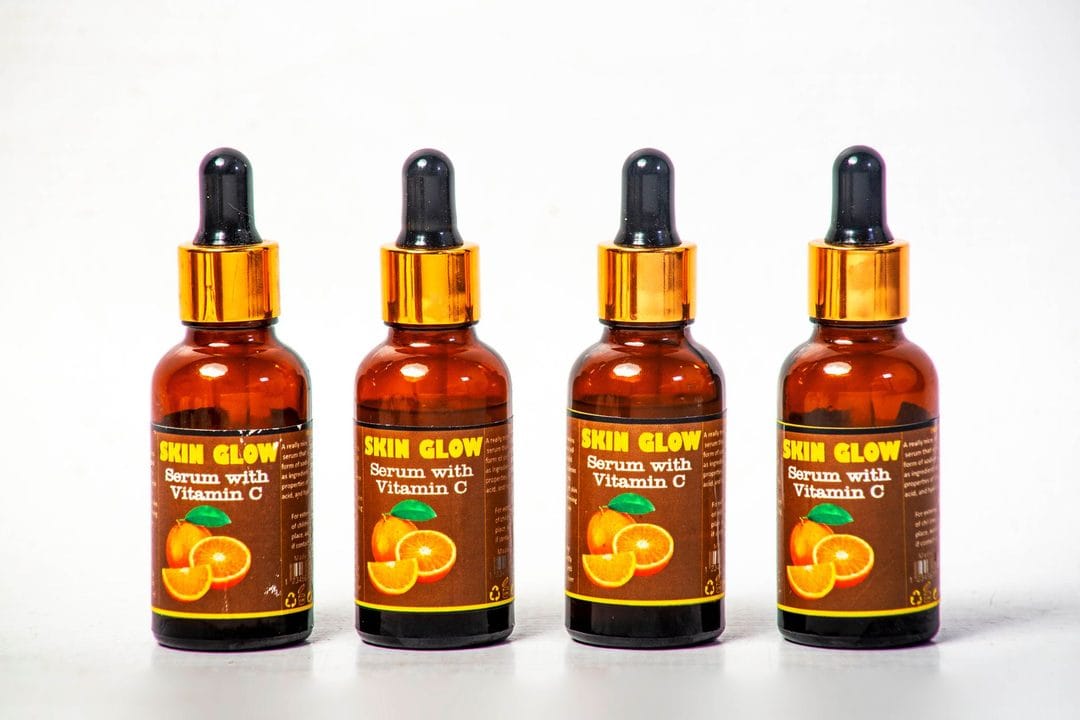
Vitamin C is the serum everyone is told to buy and almost nobody uses correctly. You spend forty dollars on a little brown bottle, it turns orange in three weeks, you are not sure it ever did anything, and you quietly switch to something that smells nicer. The problem is rarely the vitamin C itself. It is that the category is a mess of different forms, wildly different concentrations, and packaging that lets half of them die before you finish the bottle.
What it actually does — and what it doesn't
Vitamin C is an antioxidant, which in plain terms means it helps neutralize the free-radical damage your skin takes from UV and pollution during the day. Used consistently in the morning under sunscreen, a good vitamin C serum does three things you can actually see over a couple of months: it fades the flat brown spots left behind by old breakouts and sun, it gives skin a brighter, more even look, and it supports collagen, which over the long haul means firmer skin. That is a genuinely strong resume for one ingredient.
Here is what it does not do. It is not a sunscreen and it never replaces one — it works alongside SPF, mopping up the damage that gets through, which is exactly why morning is its moment. It will not erase deep wrinkles, and it will not fix hyperpigmentation in a week. Anyone promising overnight brightening is selling you a feeling, not a result. The payoff with vitamin C is slow, cumulative, and completely dependent on you actually using it most days.
The forms, ranked by whether they're worth your money
This is where most people get lost, because the label rarely just says "vitamin C." It says one of a dozen tongue-twisting derivatives, and they are not equal.
- L-ascorbic acid is the real thing — the most studied, most effective form, and the one with decades of research behind it. It is also the diva: unstable, prone to oxidizing, and best at a concentration between 10% and 20%. If you want results and your skin tolerates it, this is the one to buy. The classic SkinCeuticals C E Ferulic is the benchmark here, and yes, it costs a fortune.
- Sodium ascorbyl phosphate and magnesium ascorbyl phosphate are gentler, far more stable derivatives. They are weaker than L-ascorbic acid, but they do not nuke sensitive skin and they last longer in the bottle. A reasonable trade for reactive complexions.
- Tetrahexyldecyl ascorbate is an oil-soluble form that penetrates well and stays stable. It is showing up in a lot of nicer mid-range serums and it is a legitimately good option, especially for drier skin.
- Ascorbyl palmitate is the one to skip. It looks like vitamin C on the label and behaves like almost nothing on the skin. If it is the only form listed, put the bottle back.
You do not need to memorize all of these. You just need to flip the bottle over and check that the form is one of the first three, not the last one.
How to use it without wasting it
Apply it in the morning, on clean skin, before your moisturizer and sunscreen — a few drops, pressed in, give it a minute to absorb. Start every other day if your skin is reactive, because a strong L-ascorbic formula can tingle or even sting the first week. The pairing that genuinely amplifies it is vitamin E and ferulic acid, which is why the best formulas combine all three; they stabilize the vitamin C and extend its protective range. Sunscreen on top is non-negotiable, not optional, because the entire point is daytime protection.
And watch the bottle itself. Vitamin C oxidizes in light and air, and an oxidized serum that has turned deep orange or brown is not just weaker — it can actually irritate skin and, ironically, contribute to the dullness you bought it to fix. Buy it in an opaque or dark-glass bottle with a pump or dropper that limits air exposure, keep it somewhere cool and dark, and use it within a few months of opening. A clear bottle sitting on a sunny bathroom shelf is forty dollars decaying in real time.
Who should be careful
If your skin is very sensitive or you are dealing with an active flare of rosacea or eczema, high-strength L-ascorbic acid can be too much, and a phosphate derivative or a lower concentration is the smarter entry point. There is also a layering question worth naming: vitamin C and niacinamide are often described as enemies, which is mostly an outdated myth — modern formulas play fine together — but using a strong vitamin C and a strong exfoliating acid in the same morning is a real recipe for stinging, and worth separating. Build up slowly, pay attention to what your skin tells you in the first two weeks, and give any serum a solid eight to twelve weeks before you decide it isn't working. Most "it did nothing" verdicts are really just "I quit at week three."