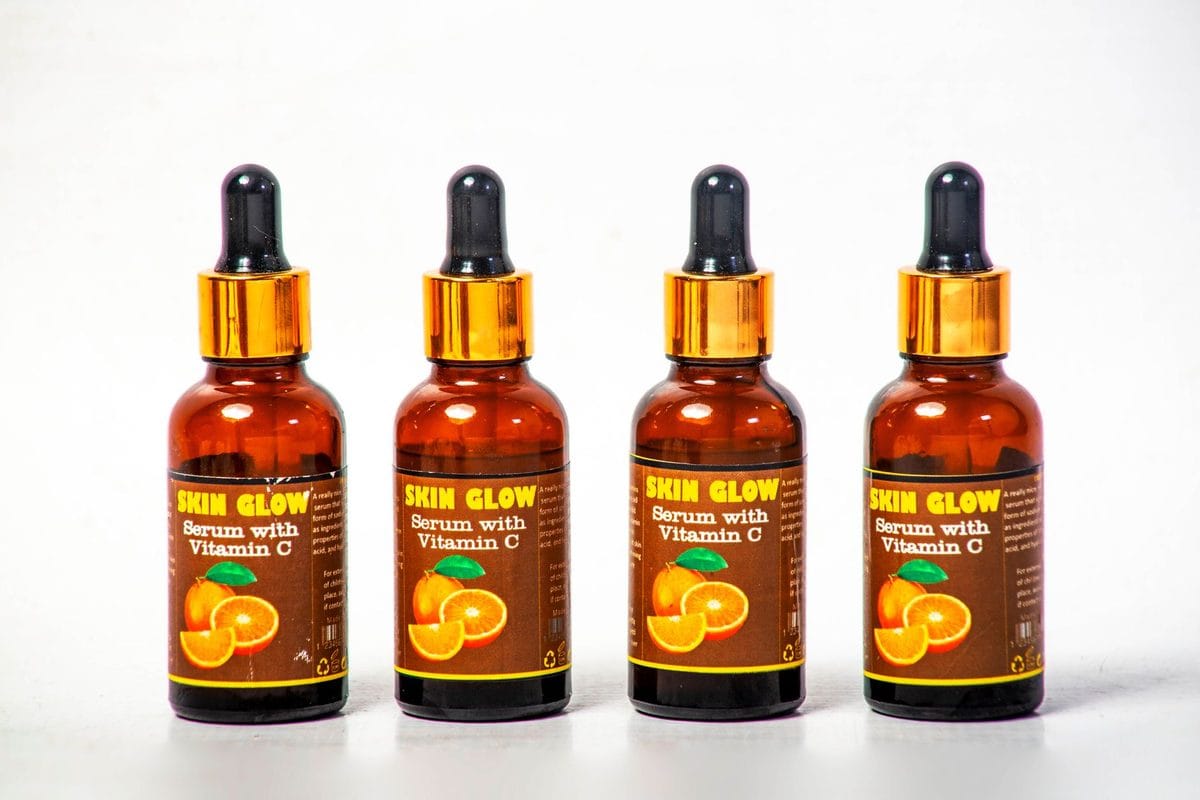
Pull a half-used bottle of vitamin C serum out of the back of your bathroom cabinet and there's a decent chance it isn't clear anymore. Maybe it's gone the color of weak tea. Maybe it's the deep amber-brown of a well-steeped one. Either way, the shift isn't random spoilage the way milk turns — it's a specific, well-documented chemical reaction, and understanding it tells you exactly how much of your money is still doing anything for your skin.
Why L-Ascorbic Acid Is the Form Everyone Actually Means
When dermatologists talk about vitamin C serums having clinical backing, they're almost always talking about one specific molecule: L-ascorbic acid, often shortened to LAA on ingredient lists. It's the form with the strongest evidence behind it for supporting collagen synthesis and providing antioxidant protection against UV- and pollution-driven free radical damage, and it's also, inconveniently, the least chemically stable form of vitamin C used in skincare. That instability isn't a manufacturing flaw — it's baked into the molecule's structure. L-ascorbic acid is a small, highly reactive antioxidant, and the same electron-donating property that makes it useful on your skin is what makes it eager to react with oxygen the moment a bottle is opened and air gets in.
Brands know this, which is why serious L-ascorbic acid formulas ship in dark glass, amber or opaque bottles, or airless pump dispensers rather than clear droppers you'd find on a drugstore shelf. A dropper that requires you to unscrew a cap and expose the liquid to room air every single morning is, chemically speaking, working against the formula. This is one of those cases where the packaging choice tells you more about a brand's seriousness than the marketing copy does.
The Two-Step Reaction That Turns Serum From Clear to Brown
Oxidation of L-ascorbic acid happens in two distinct stages, and only the first one is survivable. In step one, the molecule loses two electrons and two hydrogen ions on contact with oxygen, light, or heat, converting into a compound called dehydroascorbic acid. This is a reversible step chemically, and dehydroascorbic acid still carries some antioxidant activity in skin, which is why a serum that's shifted from clear to a pale straw yellow hasn't necessarily lost everything. Fresh, unopened L-ascorbic acid serums often already carry a faint yellow tint for this exact reason — it doesn't automatically mean the bottle is compromised.
Step two is where things go wrong for good. Continued exposure breaks open the lactone ring in the dehydroascorbic acid molecule, an irreversible structural collapse that produces 2,3-diketogulonic acid — a compound with no meaningful activity on skin. This is the same browning reaction, chemically, that turns a sliced apple or a cut avocado brown in open air: an enzyme-driven or oxygen-driven cascade converting an active compound into an inert one, visible as a color shift because the breakdown products happen to absorb light differently than the original molecule did.
What the Color in the Bottle Is Actually Telling You
Because the color change tracks the chemistry so closely, the bottle is basically running its own assay in real time.
- Pale yellow, present even in a freshly opened bottle: normal, and not a sign of lost potency on its own.
- Light-to-moderate yellow that's deepened noticeably since you opened it: the serum has moved partway through step one — some antioxidant capacity likely remains, though you're no longer getting what you paid for at full strength.
- Amber, orange, or brown: the lactone ring has broken in a meaningful fraction of the batch, and the product has crossed into diketogulonic acid territory, where efficacy is essentially gone.
Don't keep using a bottle once it's gone orange out of a sense of not wanting to waste it — that instinct costs you nothing in the moment but buys you nothing either, and it's worth just being honest about the math.
An Oxidized Serum Doesn't Just Go Inert
Here's the part that surprises people: a fully oxidized bottle isn't simply neutral, like water with a tint. Degraded ascorbic acid byproducts can behave as pro-oxidants, meaning a badly oxidized serum has the potential to generate reactive oxygen species on skin rather than neutralizing them — functionally closer to the environmental stress vitamin C is supposed to be defending against than to a helpful antioxidant. Some people who apply a browned serum also notice a faint tan-like discoloration on the skin afterward that isn't a reaction to an active ingredient at all — it's melanoidin and quinone byproducts from the oxidation reaction physically depositing color onto the stratum corneum, the same family of compounds responsible for the browning on that cut apple.
How Long a Bottle Actually Lasts Once It's Open
Printed expiration dates on vitamin C serums assume an unopened, sealed container — they tell you almost nothing about a bottle you've been dipping into daily since spring. As a practical rule, a standard L-ascorbic acid serum in a basic aqueous formulation has a functional window of roughly 90 days from first use, regardless of what the box says, after which meaningful potency loss is likely even if the color still looks acceptable. Refrigeration is worth doing and not just a wellness-aisle affectation: cooler temperatures measurably slow oxidation kinetics, and keeping an opened LAA serum in the fridge door can extend its useful life noticeably compared with leaving it on a bathroom shelf that swings between cold mornings and steamy showers.
Store it away from direct light too, and resist the temptation to keep it on a sunny windowsill “so you remember to use it” — a habit that undoes half the point of buying a stabilized formula in the first place. Bathroom humidity and heat cycling from showers are genuinely worse for these formulas than most people assume, which is exactly why a growing number of serious LAA products now specify a nightstand or a fridge rather than a bathroom.
Formulas Engineered to Slow the Clock
Stability isn't only about the L-ascorbic acid concentration on the label. Formulation chemistry matters just as much. A low pH, generally in the 3.2–3.5 range, keeps the ascorbic acid in its most stable, most skin-penetrable form, and co-antioxidants such as ferulic acid and vitamin E slow the oxidation cascade by getting oxidized preferentially themselves, effectively sacrificing themselves before the vitamin C degrades. SkinCeuticals C E Ferulic, priced around $185 for a 1-ounce bottle at full retail, is the product most often cited as the reference formulation built around exactly this combination — 15% L-ascorbic acid stabilized with ferulic acid and vitamin E at a low pH — and it's the reason so many other brands describe their own serums as “C E Ferulic dupes.” That reputation is earned on the chemistry, not just the price tag.
If You Don't Want to Babysit a Bottle
Not everyone wants to track a 90-day countdown or keep a serum refrigerated, and that's a legitimate reason to look at vitamin C derivatives instead of pure L-ascorbic acid. Sodium ascorbyl phosphate and ascorbyl glucoside are both water-soluble derivatives that convert to active ascorbic acid once absorbed into skin, and both are meaningfully more stable in a bottle — The Ordinary's Ascorbyl Glucoside Solution 12%, which retails for around $10, is a widely available example. The trade-off is real: derivative forms are generally considered less potent and slower-acting than L-ascorbic acid at equivalent concentrations, based on the evidence available so far, so anyone chasing the fastest visible brightening result is still better served by a fresh, stabilized LAA formula. For sensitive or reactive skin, though, or for anyone who's given up on remembering to use a serum before it turns, the derivative route is the better choice — less irritation potential, a longer shelf life, and no need to obsess over color.
When to Actually Throw the Bottle Out
Color alone can mislead you in one direction: a fresh, well-formulated LAA serum with a slightly amber cast straight out of the box isn't spoiled, it's just a low-pH formula behaving normally. The signal that overrides color entirely is smell. A metallic, sour, or distinctly vinegar-like odor accompanying any browning points to bacterial contamination or advanced chemical breakdown, not gentle drift, and that bottle goes in the bin regardless of how much product is left. Texture separation, a change in viscosity, or visible particles are the other hard stop signs worth checking for before you apply anything to your face.