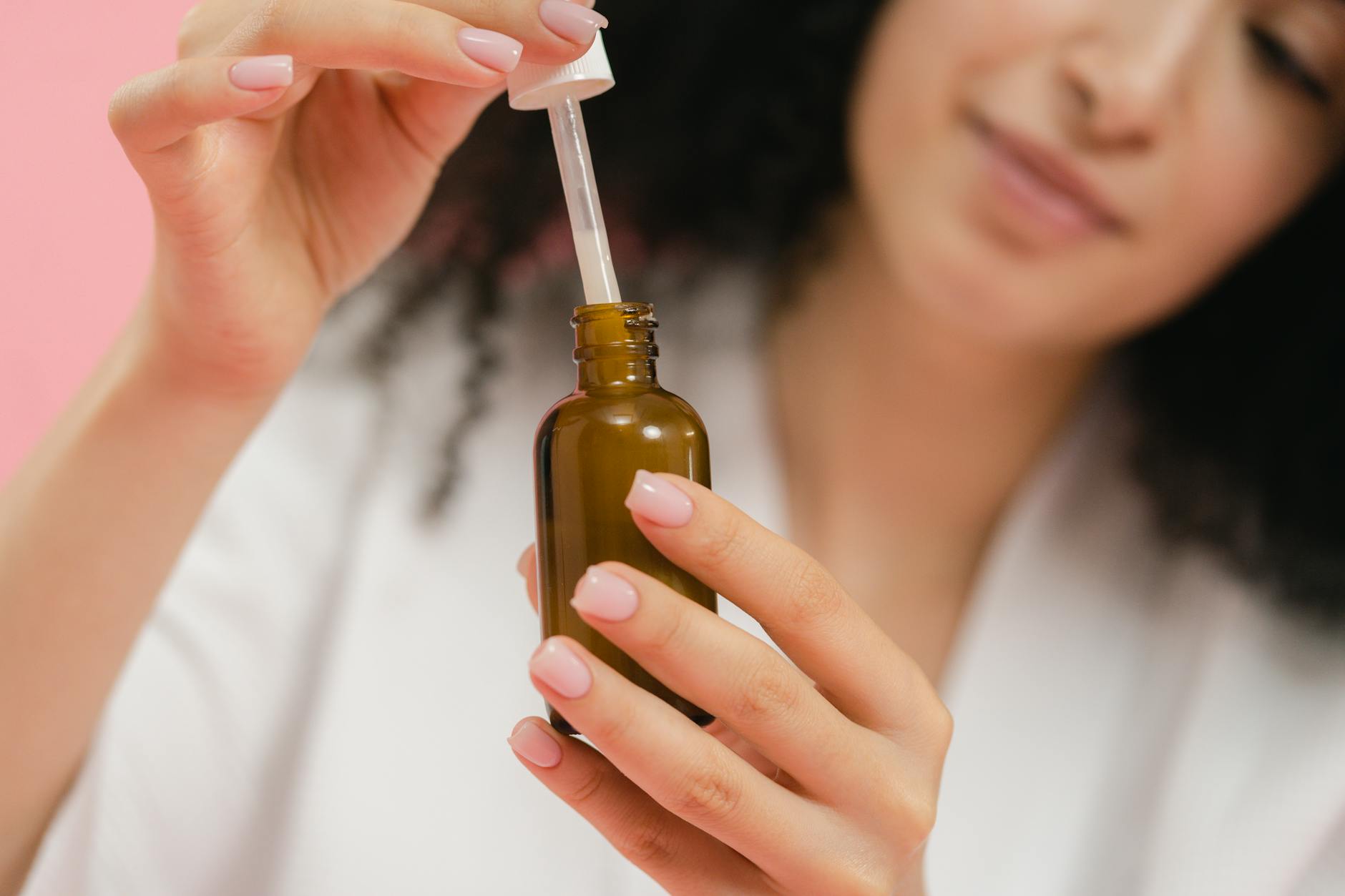
Retinol has the strongest evidence base of any over-the-counter ingredient for fine lines, uneven texture, and post-acne marks. It also has the highest beginner failure rate. The internet talks about retinol as if it were a single product with one universal effect, when really it is a family of compounds at wildly different strengths, and the difference between a satisfied user and an inflamed mess is almost entirely about how you introduce it.
This guide assumes you have never used a retinoid before, you are somewhere between your late twenties and your fifties, and you are willing to spend twelve weeks doing this properly instead of buying the strongest formula on the shelf and applying it nightly. If that sounds slow, it is. It is also the only way the data on retinoids ever produced its famous results.

What retinol actually does
Retinol is a vitamin A derivative. Once it sinks into the skin, enzymes convert it through retinaldehyde into retinoic acid — the active form your skin can read. Retinoic acid binds to receptors inside skin cells and changes which genes get expressed. The result, over months: cells in the upper layers turn over faster, the deeper layer that holds the skin together produces more collagen and hyaluronic acid, and pigment-producing cells calm down.
That is the biology. In the mirror, after roughly twelve weeks of consistent use, you tend to see smoother texture, fewer of the little bumps under the surface, lighter post-acne spots, and a thin reduction in fine lines around the eyes and mouth. Nobody who has done a proper randomised trial reports an overnight glow. The people on Instagram who got results in two weeks are showing you the early flake-and-shed phase, which is irritation, not transformation.
Choosing your strength
The single most common beginner mistake is buying 1% retinol because it is the highest number on the shelf and the price felt fair. If your skin has never seen a retinoid before, 0.25% to 0.3% is plenty. The skin cannot tell the difference between 0.3% applied correctly and 1% applied to a barrier you have just torched. The lower strength simply lets you build tolerance without the three-week red-and-flaky purgatory.
Brands worth their price in 2026, in roughly ascending strength:
- The Ordinary Retinol 0.2% in Squalane — about $9. Bottom of the ladder, very forgiving, decent vehicle. A reasonable first bottle if you are nervous.
- CeraVe Resurfacing Retinol Serum — about $20. Encapsulated retinol plus ceramides; one of the most barrier-friendly options on the high street.
- La Roche-Posay Retinol B3 Serum — about $40. A workhorse. Niacinamide softens the early irritation. This is what a dermatologist will quietly tell you to buy if you ask.
- SkinCeuticals Retinol 0.3 — about $70. Excellent stability, professional formulation. Worth it only if you have already tolerated the cheaper bottles and want to step up.
Anything labelled "retinol" above 1% from a brand you have never heard of is almost always overpriced relative to what it does. The patent on retinaldehyde and the medical literature on tretinoin make the upper end of the over-the-counter market unimpressive. If you want stronger than 1% retinol, the next rational step is a prescription.
The twelve-week introduction schedule
Skip this and you will quit by week three. Almost everyone does. The schedule is designed around two facts: your skin needs time to upregulate its tolerance, and the retinisation phase — the official term for the early irritation — peaks around days ten to twenty-one.
Weeks 1–2. Twice a week, on non-consecutive nights. A pea-sized amount for the entire face. Apply on dry skin, not damp; damp skin absorbs more and irritates faster. Buffer with moisturiser on top, not under. Both nights, the next morning, sunscreen is non-negotiable.
Weeks 3–4. If your skin tolerated the first two weeks — no stinging beyond a minute, no peeling, no inflammation — move to every other night. If you flared, hold steady at twice a week for another fortnight. This is not a contest.
Weeks 5–8. Every other night, settled. This is where most people see the first real signal: pores look less obvious, mornings have less puffiness, makeup sits better.
Weeks 9–12. If your skin is comfortable, move to nightly. Some skin types — Fitzpatrick I and II, dry, mature — will stall at three times a week and that is the correct dose for them. Forced nightly use is a vanity choice, not a science one.
The mistakes that send people back to the shelf
Mixing retinol with strong acids in the same routine. Glycolic acid at night plus retinol the same night is how the retinol-can't-work-for-me Reddit posts get written. Pick one per night. Salicylic acid is gentler, but still alternate.
Using too much. A pea-sized amount covers your entire face. The bottle lasts five months. If yours is empty in eight weeks, that is the problem.
Skipping sunscreen. Retinol thins the protective outer layer slightly while the skin reorganises underneath. UV in that window darkens pigmentation faster, which is the opposite of what you were trying to do. SPF 30 minimum, every morning, regardless of weather. This is not optional.
Starting in summer. You can — but a winter start is gentler. The barrier handles the introduction better with low UV and stable humidity. If you are reading this in May and your skin is sensitive, wait until October and start with a cleaner runway.
What it cannot do
Retinol does not fix deep static wrinkles. It does not flatten old acne scarring. It does not remove sun damage that has already cooked into the dermis. For those problems, you are looking at lasers, microneedling, or in the case of static lines, a small amount of botulinum toxin from an actual dermatologist. Retinol is a slow, structural, preventative tool. It works best when you start before you think you need it.
It also does not pair well with pregnancy or breastfeeding. The systemic absorption is low, but the data is not reassuring enough for any honest dermatologist to recommend it during those windows. Switch to bakuchiol or azelaic acid for the duration and come back to retinol afterwards.
When to call in a professional
If after twelve weeks of disciplined use your skin still flares every application, the over-the-counter market may not be the right tool. Book a dermatologist and ask about prescription tretinoin or adapalene. Adapalene, in particular, is available in many countries without a prescription and is gentler than equivalent retinol strengths despite being more potent on paper — the molecule is more stable and the irritation profile is friendlier.
If you see persistent redness lasting more than a week, eczema-like patches, or anything that looks like dermatitis rather than mild flaking, stop the retinol and treat the barrier with a plain ceramide moisturiser for two weeks before reassessing. Pushing through is folklore. The skin will tell you when it is ready, and twelve weeks of patience beats two months of damage and a year of repair.